



John Obi Mikel has revisited the harrowing moment in 2018 when his father was kidnapped in Nigeria just hours before Nigeria faced Argentina at the World Cup. He says the call came roughly two hours before kickoff, yet he chose to play in silence and protect the team from panic. Nigeria fell 2-1 in Saint Petersburg. His father was later rescued, ending a second kidnapping ordeal the family has endured. The story has reignited debate about player welfare, crisis protocols, and the often unseen burdens elite athletes carry during the highest stakes moments of their careers.
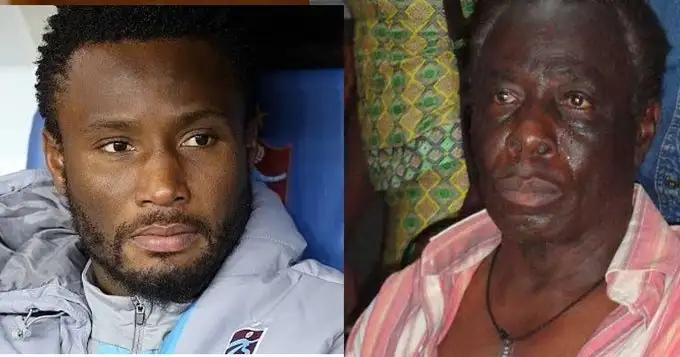
During public remarks, John Obi Mikel described receiving a phone call two hours before Nigeria’s decisive Group D match against Argentina at the 2018 World Cup in Russia, informing him that his father had been kidnapped. Nigeria lost 2-1 in Saint Petersburg, and Mikel later revealed he had kept the news private to avoid destabilizing the team. His father was subsequently rescued by Nigerian authorities after days in captivity. The episode follows an earlier kidnapping of Mikel’s father in 2011, underscoring recurring security risks faced by families of high-profile athletes.
🗣️ John Obi Mikel on when his father was kidnapped: “My dad got kidnapped while I was playing for the national team at the World Cup 2018 in Russia and we were about to play against Argentina [in the final match of the group stages]. Two hours before the game I got a phone
@ThaEuropeanLad
Impact Analysis
Mikel’s account underlines the extreme cognitive and emotional load professional players can face in major tournaments. From a performance analytics lens, this is an outlier stress event layered onto acute match pressure. Consider the timeline: final group game, knockout implications, opponent quality, and travel fatigue. The decision to play despite the news suggests a prioritization of collective objectives and personal duty, but it also exposes gaps in crisis protocols around players on international duty.
Federations and clubs typically maintain security and welfare frameworks, yet the transnational nature of tournaments makes incident response slow, fragmented, and dependent on local authorities. This case highlights three risk vectors: family security in home countries, crisis communications in the dressing room, and player mental health support during competition windows. Best practice would include pre-tournament risk scans for high-profile players, 24-7 embedded liaison officers, and confidential counseling access that can be activated without disrupting match preparation.
Public reaction further complicates the picture. Narratives that credit or blame private individuals can oversimplify the chain of events and politicize a sensitive case. For stakeholders like federations and clubs, transparency about protocols, not personalities, is key. The long-term impact is likely twofold: greater scrutiny of player welfare structures and a renewed conversation about how much pain top athletes silently carry while performing at the highest level.
Reaction
Online reactions split into two clear streams. One group fixates on power and influence, praising wealthy benefactors and implying that a phone call from the right person can cut through red tape. Comments like “God bless Roman” and “Now that’s a great boss” reflect a belief that elite networks can fast-track outcomes when institutions stall. Some even push the idea that a single figure could resolve broader security crises, which is emotionally compelling but dramatically oversimplified.
Another group leans into skepticism and irony. Lines such as “From Roman’s mouth to Putin’s ears” and “That’s why they hate Abramovich” frame the story as a parable of influence, not process. These users are less interested in welfare frameworks and more interested in the optics of power. The tone ranges from admiration to cynicism, with a current of fatalism about how things really get done.
What’s missing in the comment threads is a grounded look at what actually resolves cases like this: coordinated police work, time, and disciplined communications. Fans understandably personalize the story around heroes and villains. It is human and relatable. But the practical takeaway is that players need institutional safety nets that do not rely on ad hoc favors, and supporters should hold federations to account for that standard.
Social reactions
That's why they hâte Abramovích
DerrickTy (@jjcruise57)
Now that's a great boss
cityB4citeh (@cityb469)
Swear only Abrahamovic is enough to solve the insurgency crisis in the whole of Africa
xHaq (@isimagnet)
Prediction
Expect a renewed media cycle around player welfare at tournaments, with Mikel’s story cited as a case study in pre-match crisis management. In the near term, football federations will be pressed to publish clearer crisis playbooks: named liaison officers, secure communication channels for families, and rapid mental health access that does not compromise match preparation. Clubs who previously assumed international duty risk sits outside their remit may formalize joint protocols with national FAs for high-profile players.
From a narrative perspective, Mikel’s recollection will likely appear in long-form interviews, documentaries, or a memoir chapter, offering richer detail about decision points and support systems. The public discourse will shift from personalities to structure if journalists keep pushing for specifics: who called whom, when, and which processes were in place. Analysts and player unions will champion standardized safeguarding benchmarks for major tournaments, especially where families remain in higher-risk environments.
On the fan side, the split between influence-driven and institution-driven explanations will persist. But as more athletes share similar stories, the conversation should mature. The most constructive outcome is a measurable upgrade in duty-of-care frameworks before the next World Cup cycle, tested in friendlies and continental competitions so they are match-ready when stakes peak.
Latest today
- Kobbie Mainoo poised for January loan as Amorim trust questioned - 12 clubs line up
- Vini Jr. issues rallying cry before Man City vs Real Madrid: time to step forward
- Vinicius Jr backs Rodrygo and Gonzalo as Mbappé absence looms for Real Madrid tonight
- Mbappé skips bench warm up before Real Madrid vs Man City - starter hint or tactical bluff...
Conclusion
Mikel’s testimony matters because it pairs an unforgettable sporting moment with the private cost that accompanied it. He played one of the defining matches of his international career while carrying news no player should receive on a matchday. The lesson is not that extraordinary people fix extraordinary problems, but that ordinary systems must be strong enough to protect players and their families without improvisation.
We should credit the professionalism it took to perform under that weight, while also asking hard questions of the structures around him. Could protocols have mitigated the stress, shielded him better, or provided immediate psychological support without jeopardizing team focus? Those are solvable issues. Football spends billions to optimize marginal gains on the pitch. Redirecting a fraction toward robust safeguarding is not charity, it is performance management.
In telling the story, Mikel opens a window into what elite athletes often hide. The most respectful response is to turn empathy into standards, and standards into audited practice. That is how the game honors both the shirt and the human inside it.


DerrickTy
That's why they hâte Abramovích
cityB4citeh
Now that's a great boss
xHaq
Swear only Abrahamovic is enough to solve the insurgency crisis in the whole of Africa
The Godfather
From Roman's Mouth to Putin ears and this would be the result 🙂↕️
Frank
God bless Roman 🙏🙏🙏
J Torres
Sharp owner
CFC Lad
Asking someone whose close friends with the Russian president how he's gonna do it is wild 😂
NkAy